
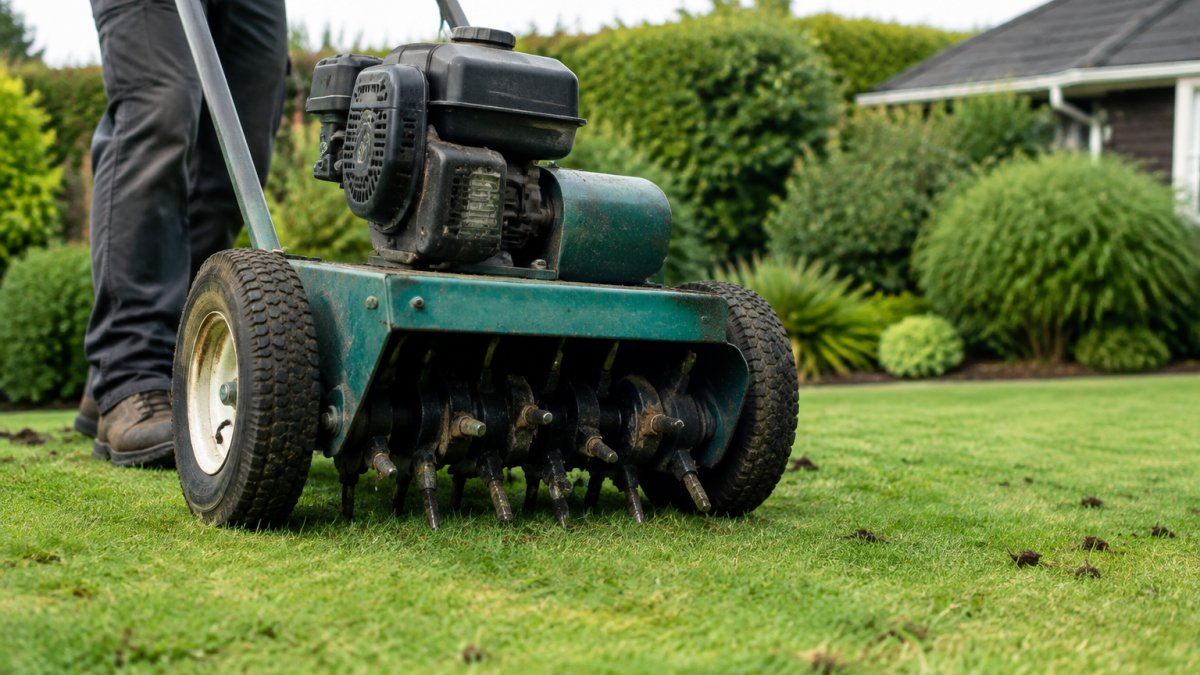
 How-to
7 Lawn Aeration Benefits for Grass That Transform Your Turf
Last Updated: November 28, 2026
Quick Summary
Lawn aeration pulls small soil cores from your lawn to loosen compacted ground so air, water and nutrients reach the roots. It relieves soil compaction, improves air movement and water infiltration, helps nutrient uptake, encourages deeper roots, promotes thicker greener grass and reduces thatch over time.
- Aerate when soil is damp but not waterlogged, avoiding summer heat stress and slow midwinter growth.
- Leave soil plugs on the lawn; they break down in a week or two and return organic matter to the soil.
- Water lightly after aerating and keep foot traffic off the lawn for a few days.
- Autumn aeration pairs well with a fertiliser programme because roots are still active and can use the nutrients.
- Signs of compaction include water pooling after rain, a hard surface underfoot and moss and weeds spreading faster than grass.
Table of Contents
- What Are the Benefits of Lawn Aeration for Grass?
- Signs Your Lawn Needs Aeration
- When to Aerate a Lawn
- What Should You Do After Lawn Aeration?
- Frequently Asked Questions
What Are the Benefits of Lawn Aeration for Grass?
Lawn aeration pulls small soil cores from your lawn to loosen compacted ground so air, water and nutrients reach the roots. The benefits of lawn aeration for grass come down to several things:
- Relieves soil compaction so roots can spread
- Improves air movement and oxygen to the root zone
- Boosts water infiltration and drainage
- Helps roots take up nutrients more easily
- Encourages deeper, stronger root growth
- Promotes thicker, greener grass
- Reduces thatch accumulation over time
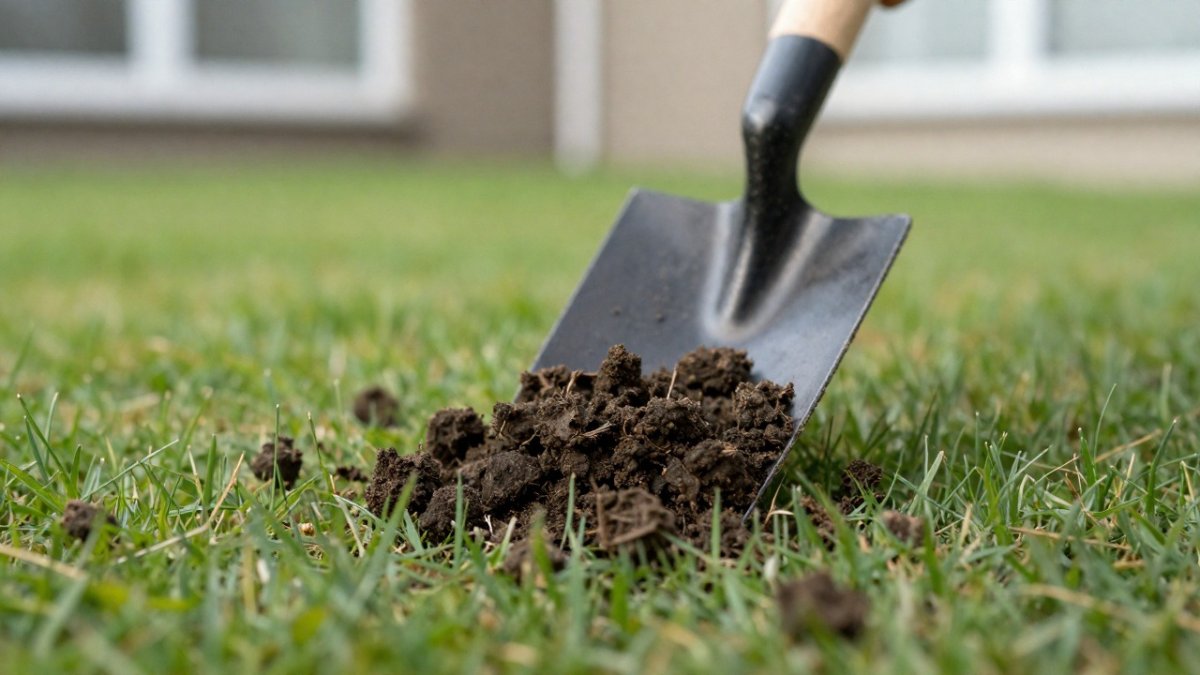
Heavy clay soils compact easily under foot traffic and mower wheels, so water can run off, roots may stay shallow, and weeds can move into the gaps. Core aeration opens that ground back up, and the soil plugs left on the surface break down and return organic matter to the lawn as they weather. For expert lawn renovations, you can book scarifying, aeration, overseeding and topdressing.
Here are the main benefits of core aeration at a glance.
| Benefit | What it does |
|---|---|
| Relieves soil compaction | Lets roots spread |
| Improves air movement | Adds oxygen to the root zone |
| Boosts water infiltration | Improves drainage |
| Helps nutrient uptake | Roots take up nutrients more easily |
| Encourages root growth | Deeper, stronger roots |
| Promotes thicker grass | Thicker, greener grass |
| Reduces thatch | Less thatch accumulation over time |
Signs Your Lawn Needs Aeration
You can usually tell a compacted lawn by how it behaves after rain and how it feels underfoot. Look for these signs:
- Water pools or runs off after rain
- The surface feels hard underfoot
- Moss and weeds are spreading faster than grass
- Thatch sits thicker than a finger's width
- Grass looks tired and thin despite watering
- Mower wheels leave visible tracks in the turf
If several of these sound familiar, compaction is likely the cause. Push a screwdriver into the soil: if it takes real force, the ground is tight. Our Christchurch lawn care services cover mowing and weed control, and our lawn renovation service includes scarifying, core aeration and topdressing.
When to Aerate a Lawn
The best time to aerate a lawn is generally during active growth, when grass can recover and fill the holes. Timing varies with grass type and season.
Timing depends on three things:
- Grass type: cool-season grasses recover fastest in mild weather
- Soil moisture: aerate when soil is damp but not waterlogged
- Season: avoid summer heat stress and slow midwinter growth
Autumn aeration pairs well with a fertiliser programme, because roots are still active and can use the nutrients. Our fertilising packages are available to help keep your lawn on track through the seasons. Soil conditions can vary from property to property, so aeration frequency is best matched to the individual lawn. You can get a free quote from Finest Turf Co to discuss what your lawn needs.
What Should You Do After Lawn Aeration?
Leave the soil plugs on the lawn; they look messy for a week or two but break down and return organic matter to the soil. Water lightly, keep foot traffic off for a few days, and overseed bare patches if needed. Aeration is not a one-off fix, and how often a lawn needs it depends on its condition and use. Pair it with feeding and weed control for the best result.
A lawn that stays compacted will keep thinning out, no matter how much you water it. Finest Turf Co brings greenkeeper experience to every job, with full insurance, a registered NZ business, and a fertilising programme built for local conditions. Get started with Finest Turf Co and give your grass the root zone it needs to thrive.
Frequently Asked Questions
What are the benefits of lawn aeration for grass?
Lawn aeration relieves soil compaction so air, water and nutrients can reach the root zone. This encourages deeper root growth, improves water infiltration and drainage, and helps reduce thatch accumulation. Over time, the lawn can become thicker and greener.
How do I know if my lawn needs aerating?
Look for water pooling on the surface after rain, hard ground that resists a garden fork, a spongy thatch layer, thin or bare patches, and weeds such as moss taking hold. If your lawn is on heavy clay soil, compaction builds faster. A simple test is pushing a screwdriver into the turf: if it barely goes in, aeration is worth planning.
What should I do after aerating my lawn?
Leave the soil plugs on the surface to break down and feed the lawn, or rake them lightly if they bother you. Water deeply, then apply fertiliser so nutrients wash into the new holes. Keep foot traffic off for a few days and mow once the grass has recovered. Avoid heavy rolling or compacting the area while it settles.
